How Prompt Caching Cuts the Cost of AI Agents in Maintenance
AI agents make the same decision thousands of times. Prompt caching lets them reread the rulebook at a tenth of the price. Here are the numbers from a real job.


AI agents can take the repetitive work off your maintenance team. Prompt caching decides what that costs.
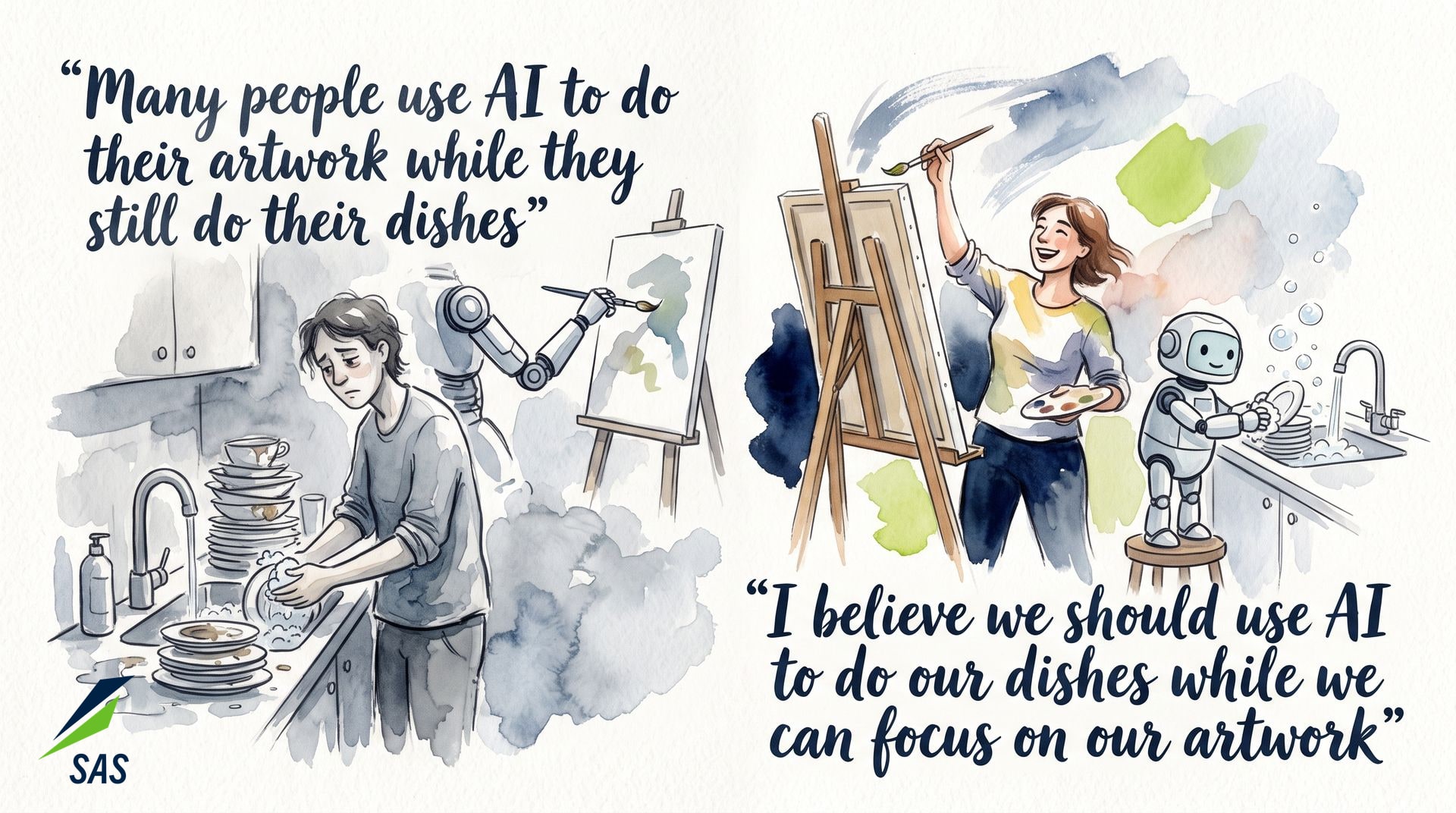
Most of us have AI the wrong way round. We ask it to write the strategy and draw the pictures, then spend our own week on the busy work. I put it to a MAINSTREAM masterclass this way: let's use AI to do our dishes so we can do the art.
AI agents are how that happens in maintenance. An agent can work through a backlog of work orders, a planning schedule or a defect register without getting bored. Doing the dishes at that scale raises a question leaders rarely ask until the invoice arrives: what does it cost when an agent makes the same kind of decision a million times?
What an AI agent actually does all day
Strip away the hype and most useful agent work in asset management is repetition. Read a work order. Decide which asset type it belongs to. Pick the failure mode. Suggest the remedy. Then do it again for the next one.
Every one of those decisions is made against the same reference material: your asset hierarchy, your failure mode library, your coding rules. We call that the rulebook. The work order changes every time. The rulebook barely changes at all.
That is exactly the kind of work engineers shouldn't be spending their week on. It is also the kind of work where the economics of AI can quietly go wrong.
The hidden cost of AI agents
Language models charge by the token, roughly a word or a piece of a word. They also have no memory between calls. Without caching, every decision has to send the whole rulebook again, and you pay full price to have it read again.
In practice the rulebook is often far bigger than the work being judged. On the job described below, each call carried about 56,000 tokens of rulebook and only 12,000 to 15,000 tokens of actual work orders. Most of what was paid for was rereading the same instructions.
What prompt caching changes
Prompt caching lets the model keep the fixed part of the prompt ready to reuse. The rulebook is written to the cache once. Every later call that starts with the same rulebook reads it from the cache at a tenth of the normal input price or less, depending on the model, and pays full price only for the new work orders. Anthropic's prompt caching documentation sets out the pricing.
The agent makes exactly the same decision with exactly the same instructions. What changes is the cost of rereading them.
In the video: one question asked of one rulebook a million times; what each decision costs with and without caching; and the three design rules that make the saving possible.
The numbers from a real job
We ran a large asset data analytics job for a facilities maintenance contractor, covering about 1.3 million historical work orders. The first step placed each work order against a fixed list of 1,963 asset variations, about a million times. The figures below are measured usage from that run, priced at batch rates. The "without caching" column reprices the same tokens as if none had been cached.
- Input cost: US$92 without caching, US$24 with caching
- Total cost: US$156 without caching, US$88 with caching
82% of the input tokens in that step came from the cache. Input cost fell by 74% and total cost by 44%. One write to the cache was reused for 1.5 billion tokens across 26,922 requests.
Where caching pays most
Caching is not a flat discount. The same job had a second step that coded each work order with a failure mode and remedy. That step used a much smaller rulebook and asked the model to write far more in reply.
- Placement (large, fixed rulebook): 82% served from cache, 44% saving
- Coding (small rulebook, grouped by asset type): 40% served from cache, 15% saving
Caching cuts the cost of reading. It does nothing for the cost of writing. Across the whole run the saving was 18%, or US$268.
The lesson is simple. Caching pays most where a large, fixed reference is reread for every decision. That describes a lot of maintenance work: classifying defects, mapping work orders to an asset register, checking jobs against a standard.
Three design choices that decide your bill
The saving came from how the job was built. Three choices made the difference.
Shaping the rulebook mattered too. Regrouping the asset list under headings cut it from 95,000 to 55,000 tokens, which made every call cheaper.
What this means for maintenance leaders
You don't need to know how caching works under the bonnet. You do need to know it exists, because it changes the business case for putting agents on the repetitive work, whether that is cleaning up Maximo work order data or a wider AI and machine learning program. When a vendor or your own team proposes an AI agent, ask three questions.
If nobody can answer, you may be paying full price to reread the same instructions a million times. Get the architecture right and the dishes get done for a fraction of the cost. Your engineers get their week back for the art: the root cause investigation, the better plan, the time on the asset.
Frequently asked questions about the cost of AI agents
What is prompt caching?
Prompt caching lets an AI model store the fixed part of a prompt, such as a rulebook or reference list, and reuse it on later calls. Those calls pay a fraction of the normal price to read the stored part, and full price only for what is new.
How much does prompt caching save?
It depends on how much of each call is fixed. On a real job classifying about a million maintenance work orders, caching cut input cost by 74% and total cost by 44% on the step with a large fixed rulebook. On a step with a small rulebook and long answers, the saving was 15%.
Does prompt caching change the AI's answers?
No. The model receives exactly the same instructions and makes the same decision. Caching only changes how much it costs to send those instructions again.
Related reading

How Prompt Caching Cuts the Cost of AI Agents in Maintenance