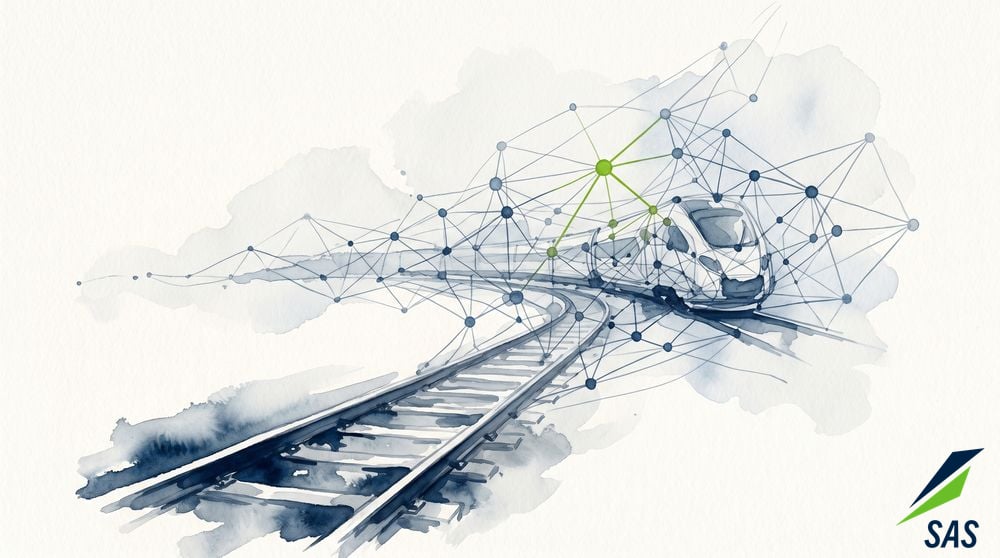
Tracks of Change Part 2: The Franchising Experiment
Splitting Melbourne's trains in 1999 tested who carries renewal and condition risk under short franchises over long lived assets. The wins, the failures and the
.jpg)
In Part 1 we traced the long public era, from Victorian Railways through the Met to the Public Transport Corporation. Whatever its faults, that model had one property an asset manager values above almost everything else: a single owner who held the whole network for the whole life of the assets, so that renewal and operating decisions were taken by the same body and the consequences of deferring either landed in the same place.
On 29 August 1999 the Kennett Government broke that arrangement apart. The chapter is usually summarised as "privatisation". For an asset manager it is more precisely a question about stewardship: what happens to the condition of a long lived asset base when you split a network in two and hand each half to a private operator on a fixed term franchise?
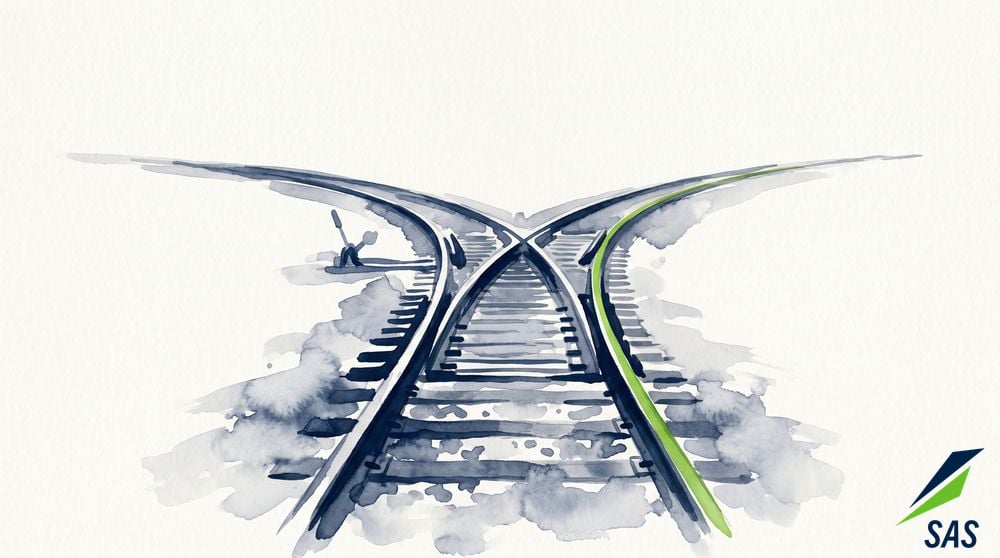
One network, two operators
The franchising round known in the numbering as MR1 divided "The Met" suburban network into two train franchises, Bayside Trains and Hillside Trains. The Director of Public Transport, a new agency, sat between the State and the operators, holding the assets on the public's behalf and letting the right to run them. National Express, a British operator, won Bayside, beating Connex, GB Railways and a Singapore MRT consortium; it rebranded Bayside as M>Train in October 2000. Hillside went to Melbourne Transport Enterprises, the consortium built around CGEA Transport (the entity that became Connex), which rebranded the franchise Connex in July 2000.
The franchisees did not own the railway. They operated and maintained a public asset base under contract, for a term. The question is whether that contract aligns the operator's incentives with the long run health of the assets, or only with the short run numbers it happens to measure.
The wins the model genuinely delivered
It is worth being even handed before reaching for the criticism, because the era did introduce things the public model had lacked. The franchises put contractual performance accountability into a network that had previously answered only to itself. Service obligations were written down and measurable, and an operator that fell short could be made to pay, which we see plainly in the later Connex penalty record. Private capital and commercial operating discipline came with the franchisees, along with the clarity that a contract forces: defined obligations, defined standards, a counterparty the State could hold to account. These are not trivial gains. A well written franchise can sharpen an operator's focus on the service in a way a comfortable monopoly rarely manages.
The misalignment at the heart of the model
The defining tension in any franchised asset is the gap between the term of the contract and the life of the asset. A suburban railway is a portfolio whose useful lives run in decades: rolling stock thirty years and more, signalling and structures longer still. The first franchises were let for terms up to fifteen years, and in practice ran shorter. No operator on a term of that length fully internalises a renewal decision whose payoff, or failure, arrives after the keys have been handed back. The bias this produces is predictable. Spending that keeps trains running this year is visible, contractually rewarded and within the operator's horizon. Spending that preserves asset condition for whoever comes next is, on a narrow commercial view, a gift to a competitor or to the State. When the contract measures punctuality and service delivery but does not robustly measure and price the condition it leaves behind, the operator optimises for what is measured, and renewal becomes the easiest thing to defer, because deferral stays invisible until a failure surfaces it.
This is the handback problem, and it bites hardest near the end of a term, when the operator's remaining window to recover any renewal investment shrinks toward zero. That places great weight on two things the public model handled implicitly: the quality of the condition data, and the handback obligations in the contract. Without evidence of the condition in which an asset was handed over and must be returned, the State cannot tell whether the operator preserved the asset or quietly consumed it. Splitting the network into two compounds the problem, fragmenting one asset register and one body of engineering knowledge across two commercial entities and creating seams where "whose asset, whose data?" must be answered by contract rather than by common ownership.
Why an operator walks
On 16 December 2002 National Express announced it would withdraw financial support from its Victorian rail operations. Unable to renegotiate terms with the State, it handed back M>Train, and the government resumed control, appointing KPMG to run the businesses through the transition. We will not invent a tidy causal story the record does not support; the contemporary commentary on exactly why is only moderately certain. What can be said plainly is structural. A franchisee holds a fixed term contract over assets it does not own. When the economics turn against it, beyond the point where renegotiation can repair them, walking away is a rational option in a way it is not for a public owner.
That is the sharpest lesson of the experiment. Transferring the operation of an asset transfers far less risk than it first appears. The asset stays. The obligation to keep a city moving stays. When an operator exits, the residual risk flows straight back to the public balance sheet, along with whatever condition and data deficit accumulated on its watch. A franchise is not a sale; it is custody on terms, and the public party can never hand the railway back to anyone.
Reunification under Connex
The government's response reframed the structure rather than the principle. Rather than re letting two franchises, it decided in 2003 to retender the network to a single operator. An agreement reached in February 2004 awarded Connex the exclusive right to run the entire network, and the two halves were reunited on 18 April 2004. This is the round known as MR2. Melbourne's trains were once again a single operated network, though still under franchise rather than back in public hands.
The single operator model removed the internal interface problem the split had created, a genuine gain: one register, one maintenance regime, one accountable party, and an end to the fragmented stewardship the two way split had imposed. It did not remove the underlying tension between contract term and asset life, and the Connex period made the cost of that tension visible to every commuter. Over the franchise the State paid Connex an average of roughly $345 million a year. Connex was bound to deliver no less than 92 per cent punctuality and to run no less than 98 per cent of scheduled services, and it paid almost $70 million in penalties for falling short over the life of the franchise. The strain showed at the extremes: during the late January 2009 heatwave, Connex cancelled more than 750 of around 2,400 scheduled services on 30 January alone.
Those penalties show the performance regime had teeth, but they price the symptom, the cancelled or late service. They are a blunt instrument for the cause, which is often an asset base whose condition and capacity have not kept pace with demand. A regime that bites on punctuality, without an equally rigorous regime for asset condition and renewal, leaves the long run stewardship question unanswered.
What the experiment taught
The Brumby Government chose not to renew Connex, running a competitive re tender and extending Connex only to 29 November 2009 to bridge to a new operator, the handover that opens Part 3.
The decade from 1999 to 2009 is not a verdict that private operation cannot work; the wins were real, and the lesson is about contract design. Franchising a railway can deliver accountability, capital and discipline, but only if the contract treats the asset base as the thing being protected, not merely the service being purchased. That means condition data good enough to prove handover state at both ends of the term, handback obligations that make consumed asset life a liability the operator must answer for, and a renewal regime owned and audited by the asset holder, so deferral cannot hide. Above all it means remembering where the risk truly sits: the operator may be the custodian, but the owner is the steward, and the owner can never walk away. In Part 3 we turn to the operator who inherited that lesson, and to the contracts written in its shadow.
Next in the series: Part 3 — The Metro Trains Era: performance regimes and a maturing franchise

ISO 55001 Certification Is a Floor, Not a Finish Line