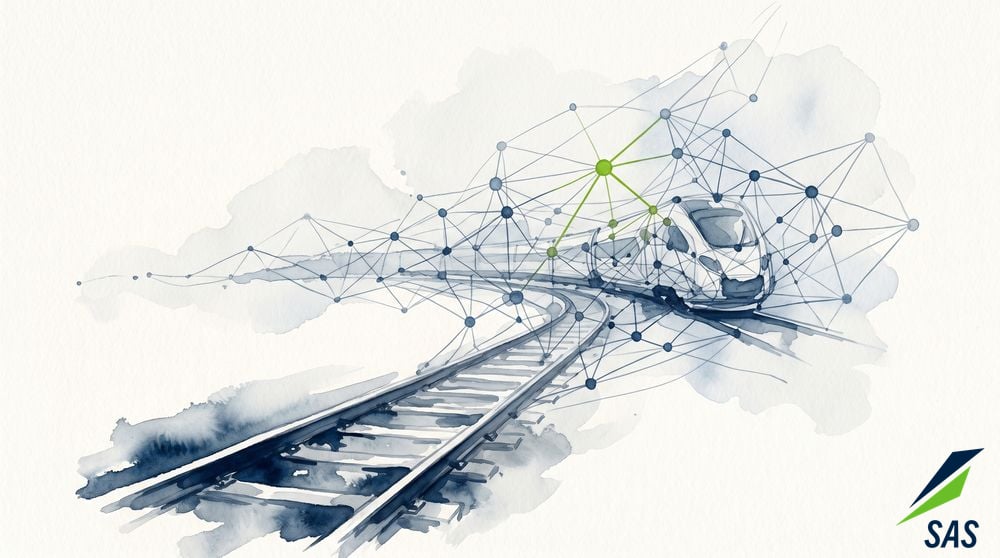
From Worthless Data to Intelligent Assets: Edge Federated ML at the Mainstream Summit 2026
SAS-AM Managing Director Shane Scriven presented on edge federated ML at the Mainstream Summit 2026 in Perth, addressing data silos, latency, and privacy barriers in asset management.
.jpg)
Most asset-intensive organisations are sitting on operational data that could be doing real work. The problem is not a lack of data — it is that the data stays locked in silos, disconnected from the decisions it should be informing.
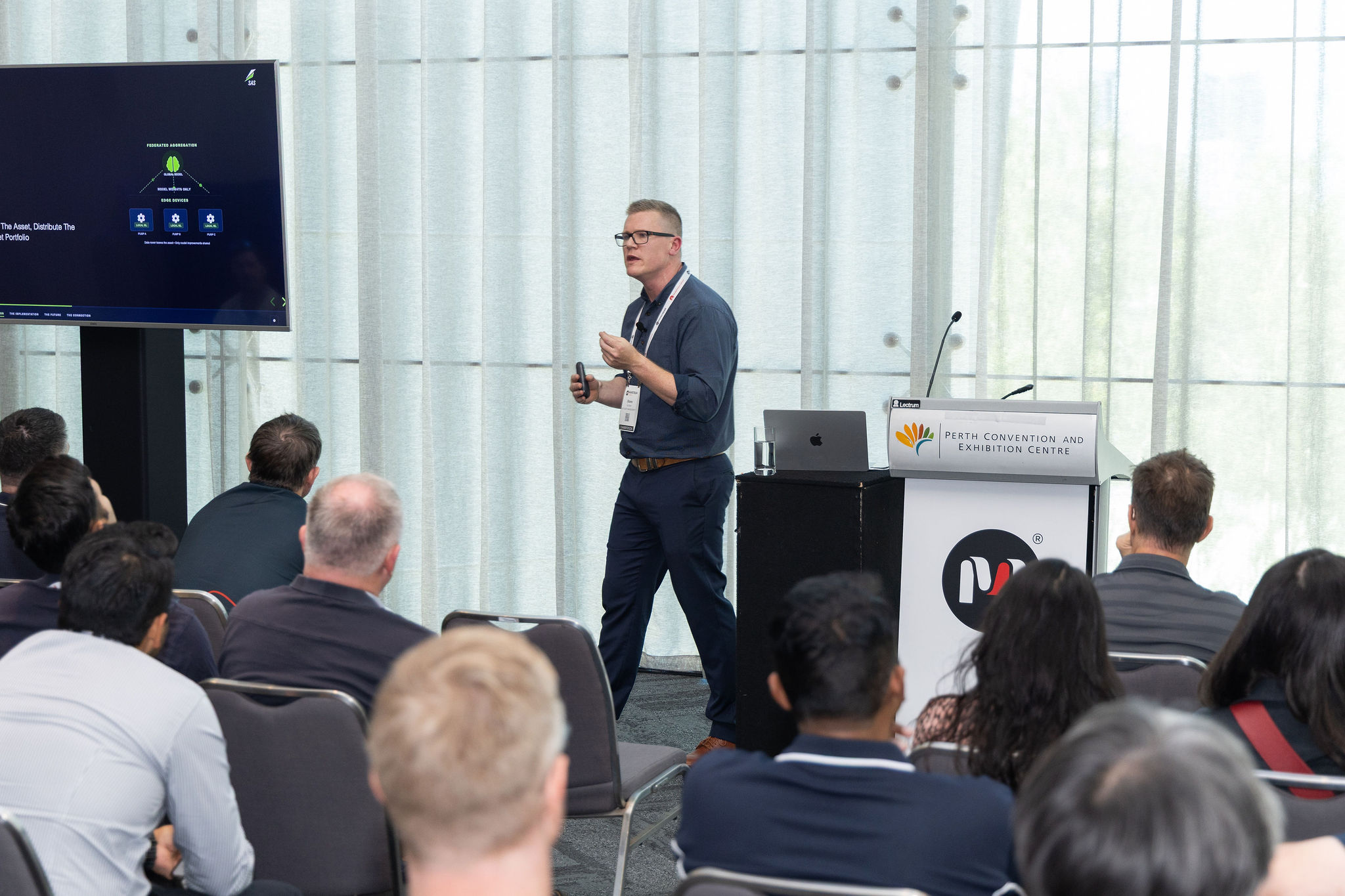
That was the starting point for SAS-AM Managing Director Shane Scriven’s session at the Mainstream Summit 2026 in Perth on 18 March, presented from the Education Pavilion at the Perth Convention and Exhibition Centre.
The session: four barriers, one architecture
The presentation — “From Worthless Data to Intelligent Assets: Edge Federated ML in Real-World Asset Management” — addressed four barriers that consistently prevent maintenance teams from extracting value from their operational data:
- Isolated asset knowledge — individual assets generate useful data, but that knowledge stays trapped on the asset or in a single site’s systems.
- Data silos — operational technology, CMMS, SCADA, and sensor networks rarely talk to each other in a way that supports machine learning.
- Cloud analytics latency — sending data to the cloud for processing introduces delays that make real-time condition monitoring impractical for time-sensitive failure modes.
- Privacy and sovereignty concerns — for many operators in transport, ports, and defence, sending raw operational data off-site is simply not an option.
Edge federated machine learning addresses all four by changing where the intelligence lives.
Place the intelligence on the asset, distribute the learning across the portfolio
The core concept is straightforward. Instead of centralising data in the cloud and running models remotely, each edge device runs its own local ML model directly at the asset. The models learn from local operational data — vibration, temperature, pressure, cycle counts — and produce local inference in real time.
The federated component is what makes this more than just edge computing. When models improve locally, only the model weights — not the raw data — are shared back to a central aggregation point. A global model is updated, and improved weights are distributed back to all edge devices across the fleet.
The result: every asset in the portfolio benefits from the collective learning of the entire fleet, without any single operator sharing their raw data.
What resonated with the audience
Drawing on implementations across Australian transport, ports, and heavy industries, the session demonstrated that the biggest barrier to adoption is not the technology — it is the assumption that meaningful ML requires cloud-scale compute and massive centralised datasets.
The concept of federated learning was new to most attendees. The discussion that followed focused heavily on how model aggregation works in practice — how you maintain model quality when training data varies across sites, how you handle edge cases, and what governance frameworks look like when no single party controls the training data.
For many in the room, the privacy angle was the most compelling. Federated aggregation means operators can participate in fleet-wide learning without exposing sensitive operational data. That distinction matters in sectors where data sovereignty is not optional.
What comes next
Shane also served as a Chairperson at the Mainstream Summit 2026, reflecting SAS-AM’s growing role in the Australian asset management community.
For organisations exploring how edge computing and federated learning apply to their asset portfolio, SAS-AM’s edge computing services — built on the NVIDIA GPU-powered AMiPU platform — deliver on-site ML inference with sub-10ms latency and zero cloud dependency.
View the full session details: Mainstream Summit session page
Explore SAS-AM’s edge computing services: Edge Computing for Asset Management
ISO 55001 Certification Is a Floor, Not a Finish Line