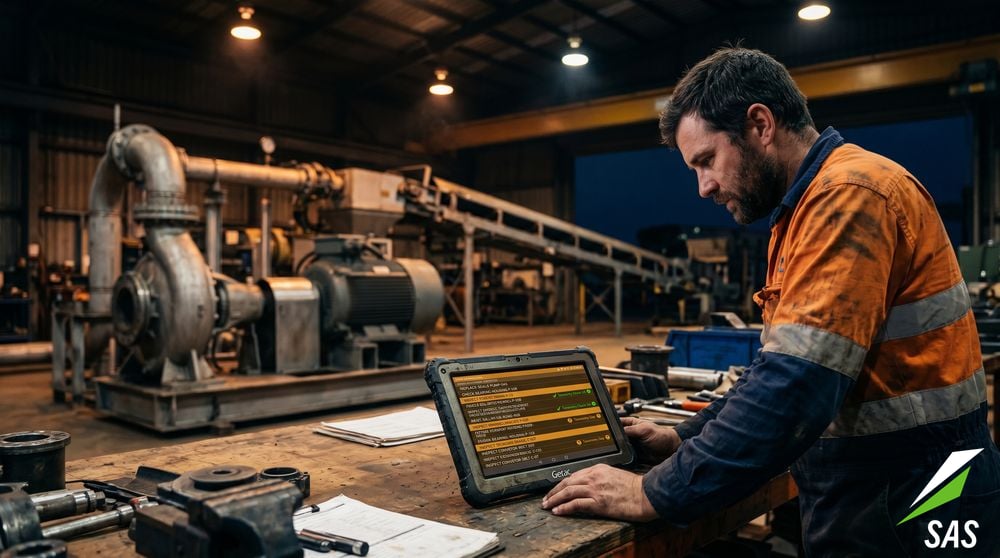
When Mining Meets Energy: Getting Asset Management Right in the Diversification Play
How Australian mining organisations can extend asset management capability into energy assets, covering operational readiness, maintenance strategy, data architecture, and workforce development for the mining-to-energy diversification.
.jpg)
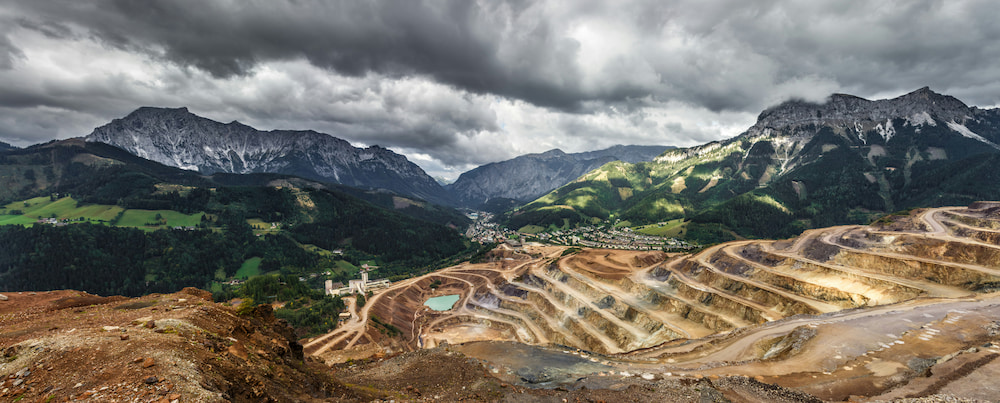
Australia's biggest resource companies aren't just digging things up anymore. They're building wind farms, hydrogen plants, battery storage facilities, and solar arrays. Sometimes right next to the pit.
It makes strategic sense. The infrastructure is often already there: heavy electrical, water management, road networks, port access. The workforce knows how to run large, complex operations. And the balance sheets can absorb the capital outlay.
But here's the thing: the asset management capability that keeps a mining operation humming doesn't automatically transfer to energy assets. Different failure modes, different regulatory frameworks, different performance expectations, and very different risk profiles.
Organisations that get this transition right will build genuine competitive advantage. Those that don't will discover that operational readiness isn't something you can bolt on after commissioning.
The Capability Gap No One Talks About
Mining asset management is mature. Decades of hard lessons have produced robust maintenance strategies, well understood criticality frameworks, and teams that know their equipment intimately. A haul truck fleet, a processing plant, a rail loadout: these are well characterised assets with deep industry benchmarks.
Energy assets are a different beast.
Wind turbines operate in fundamentally different duty cycles. Battery energy storage systems degrade in ways that don't map neatly to traditional P-F curves. Hydrogen electrolysers are still building their reliability datasets globally. And solar farms, while relatively simple mechanically, introduce performance monitoring and degradation modelling challenges that most mining maintenance teams haven't encountered.
The gap isn't about competence. Mining operators are among the most capable asset managers in the world. The gap is about context. The maintenance strategies, inspection regimes, and condition monitoring approaches that work brilliantly for fixed plant and mobile equipment need genuine rethinking for energy assets.
Operational Readiness: Where Projects Succeed or Stumble
If there's one area where we've seen the mining-to-energy transition create the most risk, it's operational readiness and assurance.
In mining, operational readiness frameworks are well established. Most Tier 1 operators have mature stage-gate processes for bringing new assets into service. But those frameworks were built for mining assets, and they carry assumptions that don't always hold.
Three areas consistently catch diversifying organisations off guard:
Regulatory complexity compounds fast. Energy assets bring a different regulatory stack. Grid connection agreements, market operator obligations, environmental compliance for renewables (yes, really), and safety frameworks that differ from mining regulations. Your operational readiness process needs to account for approvals and compliance pathways that your team may not have navigated before.
Maintenance strategy development starts from a thinner evidence base. For a new SAG mill, you can draw on decades of industry failure data to build your initial maintenance strategy. For a green hydrogen electrolyser, you're working with manufacturer recommendations and a much smaller global dataset. Your RCM analysis needs to account for this uncertainty explicitly, with review cycles built in as operating hours accumulate.
Workforce capability requires genuine investment. This isn't a training course problem. It's a competency framework problem. The skills matrix for maintaining a 200MW wind farm looks fundamentally different from a processing plant. Organisations need to map these gaps early (during FEED, not commissioning) and build realistic development pathways.
What Good Looks Like: A Maturity Perspective
We assess asset management maturity across dozens of organisations each year, and the pattern for successful mining-to-energy transitions is consistent. Organisations that handle this well share three characteristics.
They treat energy as a new asset class, not an extension of existing operations. This means dedicated maintenance strategies, tailored criticality frameworks, and performance metrics that reflect energy asset realities. Trying to shoehorn a wind turbine into your existing CMMS structure without rethinking work order types, failure codes, and PM routines creates problems that compound over time.
They invest in data architecture early. Energy assets are data-rich. A modern wind turbine generates thousands of data points per second through SCADA systems. The analytics capability to turn that data into maintenance intelligence needs planning during project development, not as an afterthought. This includes decisions about edge computing for remote sites, data sovereignty for critical infrastructure, and integration with existing enterprise systems.
They build operational readiness assurance into the project lifecycle from the start. Not as a checklist exercise at the end, but as a genuine assurance framework with stage gates, evidence requirements, and independent review. The best programmes we've seen tie operational readiness directly to capital project governance, with clear accountability for demonstrating that the organisation is genuinely ready to operate and maintain the new assets safely and effectively.
The AI and Analytics Angle
Here's where it gets interesting for organisations with existing analytics maturity in their mining operations.
Predictive maintenance models built for mining assets don't transfer directly to energy assets. But the capability to build, deploy, and maintain those models absolutely does. Organisations that have invested in data science teams, ML infrastructure, and condition monitoring platforms for mining are significantly better positioned to accelerate analytics adoption for energy assets.
The key is recognising what transfers (the capability, the governance, the data culture) and what doesn't (the specific models, the failure mode libraries, the threshold settings). Getting this distinction right avoids both the trap of starting from scratch and the trap of assuming everything carries over.
For remote energy installations (and in Australia, that's most of them), edge AI becomes particularly relevant. Running inference models locally, without depending on cloud connectivity, matters when your wind farm is 400 kilometres from the nearest decent internet connection. Sovereign AI capability, keeping sensitive operational data on-site rather than routing it through overseas cloud providers, is increasingly a board-level consideration for critical energy infrastructure.
Getting Started: Five Questions for Your Leadership Team
If your organisation is diversifying from mining into energy (or considering it), these questions will help you assess your asset management readiness:
1. Have we mapped the capability gaps between our current asset management maturity and what energy assets require? Not assumed. Actually mapped, with evidence.
2. Does our operational readiness framework account for energy-specific regulatory, technical, and workforce requirements? Or are we applying a mining template and hoping for the best?
3. What's our plan for maintenance strategy development when industry failure data is limited? How will we manage the uncertainty in our initial strategies?
4. Is our data architecture designed to handle the volume, velocity, and variety of energy asset data? And have we made deliberate decisions about where that data lives?
5. Have we allocated realistic time and budget for workforce development? Not just training, but building the competency frameworks, career pathways, and specialist recruitment needed to operate energy assets at the standard our organisation expects.
The Bigger Picture
The mining-to-energy diversification trend across Australia's resources sector isn't slowing down. If anything, it's accelerating as organisations respond to decarbonisation commitments, energy market opportunities, and the strategic value of controlling their own energy supply.
The organisations that will thrive in this transition are those that treat asset management capability as a genuine strategic enabler, not a back-office function that'll sort itself out. They'll invest in operational readiness with the same rigour they apply to geological modelling or mine planning. And they'll build the analytical capability to manage energy assets with the same sophistication they bring to their core mining operations.
The good news? Australian mining companies already have most of the foundational capability. The work is in extending it thoughtfully, with honest assessment of gaps and realistic plans to close them.
That's a challenge worth getting right.
Australian mining fleets: what the data actually shows