
Edge AI in Practice: How Hospitals, Water Utilities, and Transport Are Using Offline Intelligence
Real-world examples of edge AI transforming maintenance decisions across healthcare, water, and transport sectors.
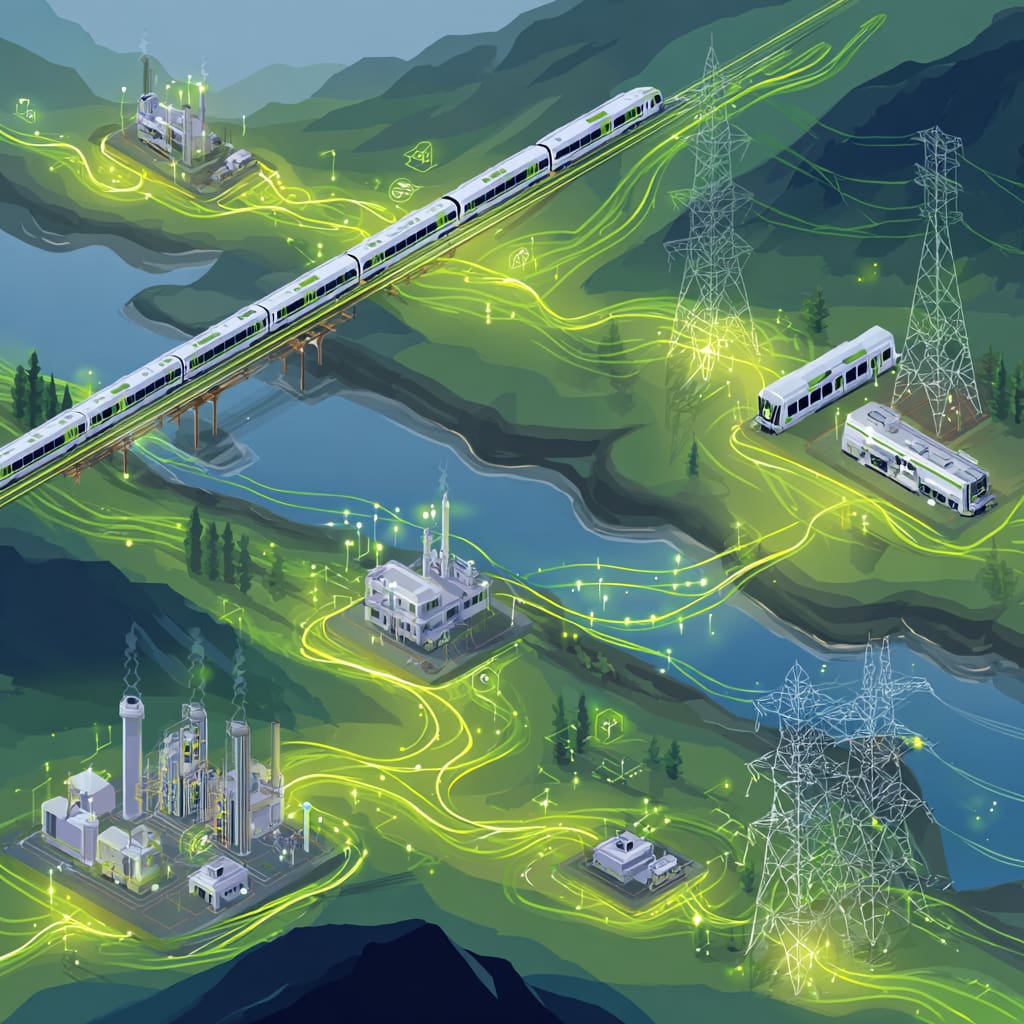
.jpg)
Theory is helpful, but at some point you need to see what edge AI actually looks like in operation. The use cases that follow aren't hypothetical - they represent patterns we're seeing deployed across Australian infrastructure, with real constraints and real outcomes.
Water utilities: when the network fails, the treatment can't
A regional water utility faced a problem that will sound familiar to anyone managing distributed infrastructure: dozens of treatment plants and pump stations spread across thousands of square kilometres, connected by a network that was reliable about 94% of the time.
Six percent downtime sounds acceptable until you consider what happens during that 6%. Pumps cavitate without warning. Chemical dosing drifts without correction. Operators don't find out about problems until someone drives out to check - which in regional areas can mean hours of delay.
The deployment. Edge compute devices at each facility running lightweight anomaly detection models. Vibration patterns, power consumption, flow rates, and chemical parameters all processed locally. When something looks wrong, the local system makes the call - no need to phone home first.
What changed. During a recent communications outage that lasted 14 hours, the edge systems identified and responded to three separate pump anomalies that would previously have run undetected. One pump showed early bearing degradation signatures. Two showed flow anomalies suggesting intake blockages. All three got addressed by local operators before they became failures.
The numbers. Unplanned maintenance callouts dropped 34% in the first year. More importantly, the utility stopped losing sleep over what was happening at remote sites during network outages.
Hospital infrastructure: where 47 seconds is 47 seconds too long
Healthcare facilities have a unique constraint: operational data often sits adjacent to patient data, and the requirements around data sovereignty are non-negotiable. A large metropolitan hospital group needed predictive maintenance for critical infrastructure but couldn't send operational data to external cloud services.
The challenge. HVAC systems serving operating theatres and pharmaceutical storage. Power systems supporting life-critical equipment. Sterilisation systems where temperature deviations mean reprocessing entire loads. All of these need continuous monitoring, and all generate data that can't leave the facility.
The deployment. On-premises edge infrastructure running the same AI models you'd find in a cloud deployment, but contained entirely within the hospital's network boundary. Vibration monitoring for air handling units, thermal monitoring for electrical systems, and process parameter tracking for sterilisation equipment.
What changed. A compressor showing early-stage bearing degradation was flagged 11 days before it would have failed. That's 11 days of planning for replacement parts and scheduling maintenance during a quiet period, versus an emergency callout during surgery that would have required switching to backup systems.
The broader impact. The hospital group now approaches infrastructure reliability differently. Instead of running equipment to failure and relying on redundancy, they're genuinely predicting problems. Equipment availability in critical areas improved from 97.3% to 99.1% - a difference that matters when the consequences of downtime are measured in patient outcomes.
Rail: keeping trains moving in tunnels where signals don't reach
Urban rail networks present an interesting edge case - literally. Trains spend significant time underground or in locations where connectivity is intermittent. But they also operate on tight schedules where delays compound quickly.
The context. A metropolitan rail operator wanted to detect early-stage wheel bearing failures before they caused service disruptions. The challenge: the trains themselves are the assets, and they're not continuously connected to any network.
The deployment. Edge devices on selected train sets processing vibration data from bearing monitoring points. The models run continuously during operation, building up a picture of bearing health over time. When the train connects to depot WiFi, summaries upload for fleet-wide analysis - but the critical detection happens onboard, in real-time.
What changed. A bearing showing early spalling was detected three weeks before it would have triggered a failure warning. That's three weeks to schedule the bogie into maintenance during a planned service interval, rather than pulling a train out of service during peak hour.
Fleet perspective. The edge devices don't just detect individual problems - they contribute to fleet-wide learning without sending raw data centrally. Patterns discovered on one train inform detection on all trains, while the actual sensor data stays with the asset.
Mining: intelligence underground where the cloud can't reach
Underground mining operations are about as far from cloud connectivity as you can get. Rock doesn't transmit radio signals well, running fibre is expensive and fragile, and equipment failures can have safety consequences measured in lives rather than dollars.
The problem. A mining operation running continuous conveyor systems had been experiencing unpredictable failures that stopped production and created safety hazards. Traditional monitoring required operators to manually check equipment, and problems often progressed from detectable to catastrophic between inspection cycles.
The deployment. Self-contained edge monitoring on critical conveyor drive systems. Vibration, temperature, and motor current analysed locally on hardened industrial hardware. No network connection required for basic operation - the system stores data locally and syncs opportunistically.
What changed. A drive motor heading toward failure was detected during what would normally be a blind period between inspections. The local system flagged the anomaly, and when an operator passed by with a handheld device, the alert transferred via Bluetooth. Maintenance happened during a scheduled break rather than as an emergency during production.
The safety dimension. Beyond production impacts, the reliability improvement has safety implications. Equipment that fails predictably can be approached safely. Equipment that fails without warning creates hazards.
Aged care: infrastructure reliability where vulnerability is highest
Aged care facilities don't often feature in discussions about critical infrastructure, but they probably should. The residents are vulnerable, the consequences of infrastructure failures are serious, and the facilities often lack sophisticated maintenance capability.
The context. A group of regional aged care facilities needed to improve HVAC reliability. Temperature excursions outside safe ranges aren't just uncomfortable for elderly residents - they're dangerous. But the facilities didn't have on-site engineering staff and couldn't justify enterprise-grade building management systems.
The deployment. Compact edge devices monitoring air conditioning systems at each facility. Not predicting failures years in advance - just giving enough warning to get a technician on-site before a failure becomes a crisis. The systems also track performance degradation that indicates the need for maintenance before efficiency drops significantly.
What changed. Warning times went from zero (equipment failed, then someone noticed) to 48-72 hours for most failure modes. That's enough time to get parts and arrange service without rushing. Energy costs also dropped 12% as degraded equipment got maintained before it became inefficient.
The human factor. Staff at these facilities aren't maintenance professionals - they're care providers. The edge systems translate complex equipment behaviour into simple alerts that anyone can understand: "Air conditioning unit 3 needs attention - call the service number."
Patterns across the cases
A few things stand out across these deployments.
Connectivity constraints drive edge adoption. In every case, unreliable or unavailable network access was part of the reason for choosing edge deployment. The cloud works great when you can reach it - but critical infrastructure needs intelligence that keeps working when you can't.
Data sensitivity matters. Healthcare and defence aren't the only sectors with data concerns. Water utilities, rail operators, and mining companies are all increasingly cautious about where operational data lives and who can access it.
Simple models deployed well beat complex models deployed poorly. None of these deployments use cutting-edge deep learning. They use well-understood techniques - vibration analysis, thermal trending, anomaly detection - packaged for reliable edge operation. The value comes from getting useful models running where they're needed, not from algorithmic sophistication.
The value is in avoided failures. In every case, the ROI calculation comes down to failures that didn't happen. Equipment that kept running. Services that stayed available. Problems caught before they became crises. The technology enables this, but the value is operational.
These cases represent where edge AI is today - practical, proven, and delivering measurable outcomes for organisations that need intelligence at the asset, not just in the cloud.
Sector-Specific Context
The water utility case study highlights challenges common across the sector - distributed assets, connectivity constraints, and the critical nature of continuous service. For a deeper exploration of how water utilities are approaching resilience and technology adoption, our analysis of resilience readiness in the water sector examines the broader transformation underway.
The edge AI platform landscape continues to evolve rapidly. For organisations evaluating deployment options, Helin's comprehensive review of edge AI platforms provides useful comparison of current offerings, covering capabilities from industrial IoT specialists to general-purpose edge compute solutions. Understanding what's available helps match platform selection to specific operational requirements.